


Triton Three Finger Grip Stun Gun | Squeeze-to-Fire Activation | Ergonomic Palm Fit | Rechargeable | Safety Disable Pin | Personal Defense Stun Device
$25.95
Buy with Confidence
Covered by a 30-Day Money Back Guarantee. If it's not right for you, returns are easy and hassle-free.

Secure checkout • 100% Satisfaction Guaranteed • 30 Day Money Back Guarantee • Easy Returns • Fast Customer Support
The Triton stun gun fits your closed fist and fires with a squeeze — no button hunting, no wasted motion. Built-in charger and safety disable pin make it a dependable everyday carry for anyone who wants a faster, more natural draw.
Most stun guns are designed around a button. You reach, you search, you press. That half-second of fumbling is exactly when you can’t afford it. The Triton takes a different approach — the activation is built into how you hold it. Close your hand around the grip, squeeze, and it fires. That’s the whole operation.
Who This Is Best For
The Triton is a strong fit for people who want a stun gun they can access by instinct rather than by thought. If you’ve ever practiced drawing a firearm, you understand the value of a motion that’s already built into your grip. The same logic applies here. It’s also well-suited for people with smaller hands who find traditional stun guns awkward to hold, or anyone who wants a device that disappears into a closed fist without looking like a weapon from the outside.
Decision Shortcut
If your priority is mechanical simplicity and fast access without button hunting, this is your device. It doesn’t have the form factor of a lipstick stun gun or the clip of a keychain model — it’s a dedicated carry piece. You hold it, you’re ready. That’s a meaningful difference in a high-stress moment when fine motor control takes a hit.
Key Features
- Squeeze-to-fire activation — fires when your hand closes naturally around the grip, eliminating the button-search delay under stress
- Three-finger ergonomic grip — seats securely in the palm, resists being knocked loose, and keeps the device oriented correctly without looking
- Built-in rechargeable design — plugs directly into a standard outlet, no batteries to replace or track
- Safety disable pin with wrist strap — if the device is taken from you, the connection breaks and the stun gun stops functioning
- Compact palm-fit profile — holds flat against the hand, low-profile enough to carry without drawing attention
- Non-lethal stopping deterrent — delivers an electric charge designed to disrupt muscle control and create distance, without permanent injury
| Feature | Triton Three-Finger Grip | Standard Push-Button Stun Gun | Keychain Stun Gun |
|---|---|---|---|
| Activation method | Squeeze-to-fire | Side or top button | Button or slide |
| Under-stress accessibility | High — no button to locate | Moderate — requires finger placement | Low to moderate — small form factor |
| Best carry situation | Hand carry, pocket, bag | Holster, bag, pocket | Keys, bag zipper clip |
| Safety disable | Wrist strap pin | Safety switch | Varies |
Practical Details
The Triton stun gun is legal to carry in most U.S. states, but laws governing stun devices vary by state and municipality. Check your local regulations before carrying. The built-in charger means no separate charging cable to keep track of — plug directly into a standard outlet and top it off regularly. The safety disable wrist strap should be worn during carry; if the device is grabbed and pulled away, the pin disengages and the device won’t fire. Box includes the stun gun with integrated charger and wrist strap disable pin.
If you’ve been carrying a stun gun you’re not fully confident you can operate fast under pressure, this is worth the switch. The Triton removes the variable that trips people up most — the button. Add it to your cart and carry something you can actually deploy when it counts.
Frequently Asked Questions
Q: How does the squeeze-to-fire mechanism work exactly?
The activation contacts are built into the grip itself. When you close your hand around the device with normal holding pressure, the circuit completes and the stun gun is ready to fire. There’s no button to locate or press separately. It’s the same motion as simply gripping the device firmly — which is what you’re going to do anyway in a tense situation.
Q: Can the Triton fire accidentally if it’s in a bag or pocket?
The safety disable pin addresses this directly. When the wrist strap pin is inserted, the device cannot activate regardless of pressure on the grip. Keep the pin in during storage and transport, remove it only when you’re carrying it ready for use. Standard practice for any stun gun — treat it the same way you’d treat a safety on any other defensive tool.
Q: How often does it need to be recharged?
Stun guns don’t draw power when stored — they discharge during use or testing. For most people, a monthly charge cycle is sufficient to keep it ready. If you test the arc regularly, charge more frequently. The built-in charger makes this a quick habit: plug in, let it charge, unplug. No cables to track down.
Q: Is this a good option for someone with smaller hands?
Yes. The three-finger grip was designed to fit a closed hand rather than a full palm spread, which tends to suit smaller hand sizes well. The squeeze activation also means you don’t need to stretch a finger to reach a button on the side — the grip does the work. If hand fit is a concern with other stun gun styles, this design is worth trying.
| Stun Gun Manufacturer | Safety Technology |
|---|---|
| Stun Gun Brand | Triton |
| Voltage | 80,000,000 |
| Battery | Rechargeable Lithium |
| Safety | Switch |
| Color | Black |
| Included | Charger Cord |
| Material | ABS Plastic + Rubberized Coating |
| Warranty | Lifetime |
| Weight | 0.29 lbs |
Additional information
Related products
-
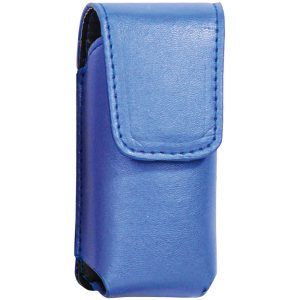
Stun Gun Holster for Li’L Guy – Premium Leatherette Belt Carry Case, Quick-Draw Access, Secure Retention System
$4.95 Select options This product has multiple variants. The options may be chosen on the product page -

BashLite Stun Gun Flashlight – 85 Million Volt, Rechargeable LED, Tactical Light, Disable Pin Safety, Heavy Duty
$25.95 Add to cart -

ZAP Stun Walking Cane – 1 Million Volt Disguised Self Defense, Mobility Support, Rechargeable Protection
$109.95 Add to cart -

Disguised Flashlight Stun Gun – 75 Million Volt, Rechargeable LED Light, Compact Covert Self Defense Tool
$25.95 Add to cart
Reviews
There are no reviews yet.